About
CrabTrace Project
End-to-end traceability for individual mud crabs — from capture to consumer — built on government-integrated compliance and global standards.
Transforming seafood traceability
Addressing transparency challenges in Australia's high-value mud crab industry.
CrabTrace is driving a transformative leap in transparency and traceability across Australia’s seafood sector, beginning with the high-value, high-risk mud crab industry. Worth an estimated $50 million annually, this national sector is particularly susceptible to illegal fishing and black-market trading—threatening sustainability, industry viability, and consumer confidence.
To address these challenges, CrabTrace provides a secure digital infrastructure for end-to-end tracking of individual mud crabs, from capture to consumer. Co-developed by the Queensland Department of Primary Industries and the University of Technology Sydney—in collaboration with Fisheries Queensland and industry stakeholders—the platform brings all supply chain participants into a unified, verified traceability ecosystem.
A key strength of CrabTrace is its seamless integration with Fisheries Queensland’s mandatory compliance reporting systems. By embedding traceability into existing regulatory workflows, it eliminates data duplication, enhances data quality, and reduces the reporting burden for fishers. Aligned with global standards—specifically the Global Dialogue on Seafood Traceability (GDST) and GS1—the system supports interoperability and scalability across domestic and international supply chains.
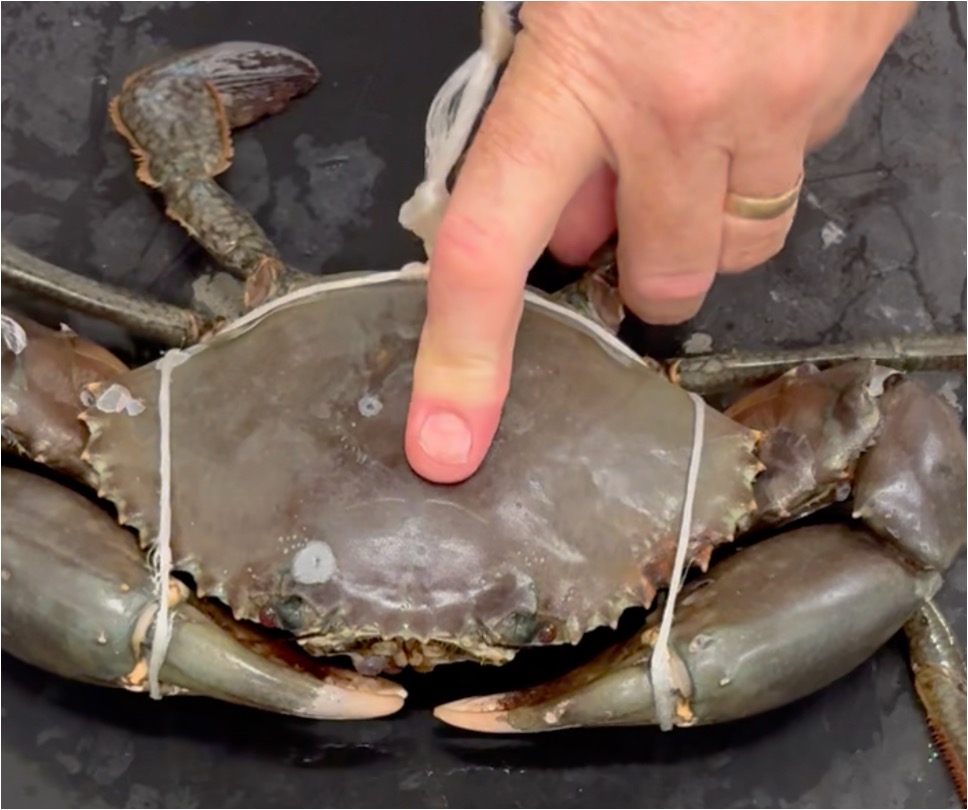
CrabTrace empowers regulators to verify legally sourced product, enables fishers to prove the legitimacy and sustainability of their catch, and provides supply chain partners with confidence in product origin and quality. For the first time, all stakeholders—fishers, buyers, sellers, regulators, and consumers—are connected through a single, trusted platform.
The system also opens new marketing opportunities. Each crab’s QR code tag links to a public webpage, allowing consumers to access verified harvest details and connect directly with the source of their seafood.
More than a compliance tool, CrabTrace lays the groundwork for a smarter, more transparent, and sustainable seafood system—offering a scalable model for data-driven traceability across other high-value fisheries, food commodities, and industries.
Purpose-built for wild-caught seafood
Individual-level traceability co-designed with regulators, fishers, and supply chain partners.
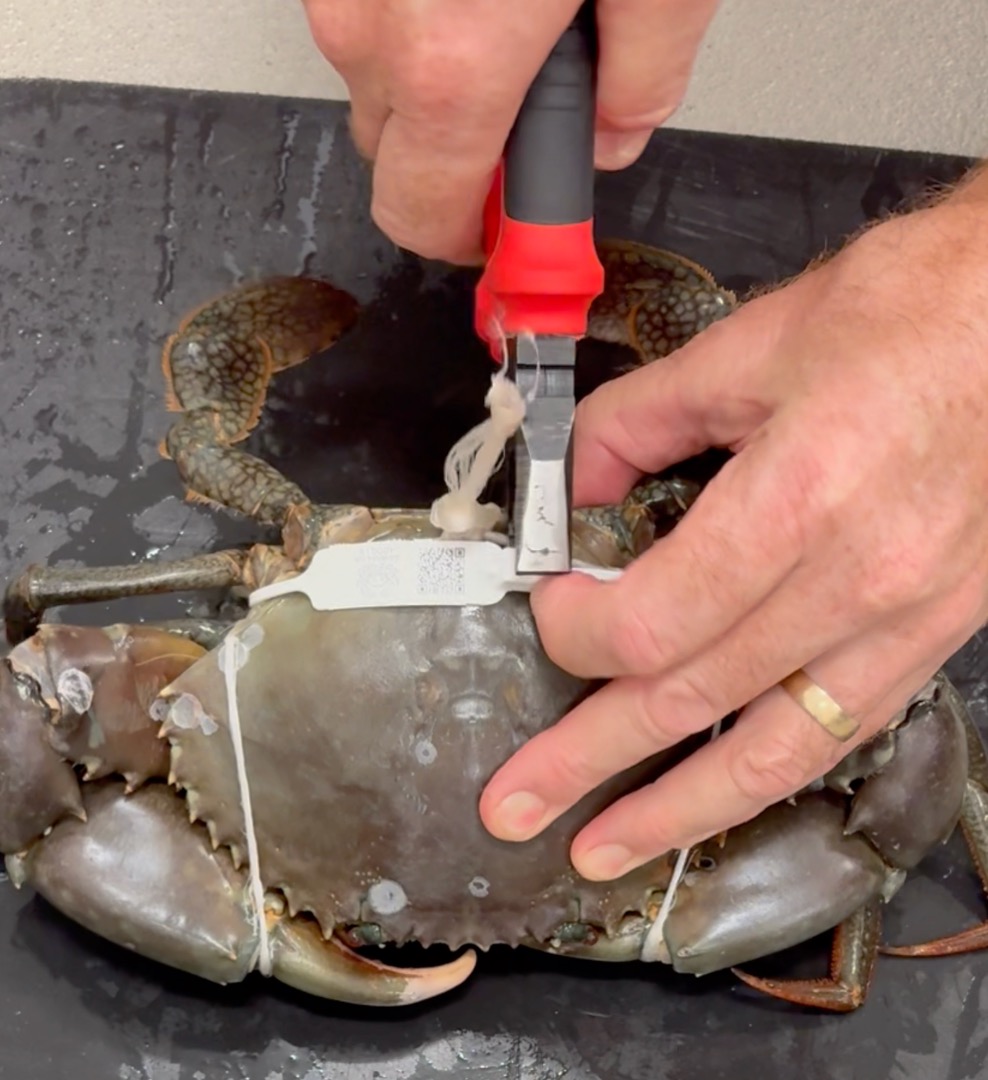
CrabTrace is Australia’s first seafood traceability system fully integrated with a government fisheries reporting framework, capturing fisher-specific data directly from existing Fisheries Queensland systems. This seamless integration is a key differentiator—eliminating dual data entry and lowering adoption barriers for fishers.
Unlike generic, off-the-shelf platforms, CrabTrace was co-designed with regulators, fishers, and supply chain partners to ensure both credibility and practical relevance. Purpose-built for the wild-caught, live seafood sector, it complements existing workflows rather than disrupting them. Its alignment with global GS1 and Global Dialogue on Seafood Traceability (GDST) standards ensures data accuracy, interoperability, and scalability.
While many systems only track product batches, CrabTrace delivers true individual-level traceability. Each crab is tagged with a tamper-evident QR code that links to a secure web platform containing verified, event-level data. Fishers can also include optional provenance, quality, and sustainability information—shared via a mobile-friendly public webpage that doubles as a brand storytelling and marketing tool.
A robust role-based access control system ensures users—from fishers and regulators to administrators and the public—can only view data relevant to their role. Fishers also benefit from real-time analytics, including public scan counts and generalized scan locations, providing insight into consumer engagement downstream.
First-and-last scan
Fishers activate a batch of sequential tags by scanning only the first and last tag—removing the need to scan each crab individually and improving onboard efficiency.
Beyond compliance
CrabTrace delivers regulatory assurance, commercial value, and whole-of-system transparency—a new benchmark for digital traceability in the Australian seafood industry and beyond.
A digital ecosystem for live mud crabs
QR tags, role-based access, and secure integration with Fisheries Queensland.
CrabTrace is a purpose-built digital ecosystem designed for the live mud crab industry. It combines two core technologies: a field-tested operational workflow aligned with Fisheries Queensland’s regulatory requirements, and a secure, role-based traceability framework that controls data access by stakeholder role.
At the system’s core is a low-cost QR code tag—printed on a cable-tie-style band and affixed to each crab after capture. Each tag uses the GS1 Serialized Global Trade Item Number (SGTIN) format, allowing individual-level identification and tracking. When scanned, the tag links to a mobile-accessible webpage with agreed provenance and quality data. Example: id.crabtrace.com/01/01819528911902/21/400012
Built for remote, fast-paced conditions, the CrabTrace workflow features a first-and-last scan method to activate tag batches—reducing manual input and improving onboard efficiency. It integrates directly with Queensland’s regulatory platforms, eliminating data duplication and streamlining compliance reporting.
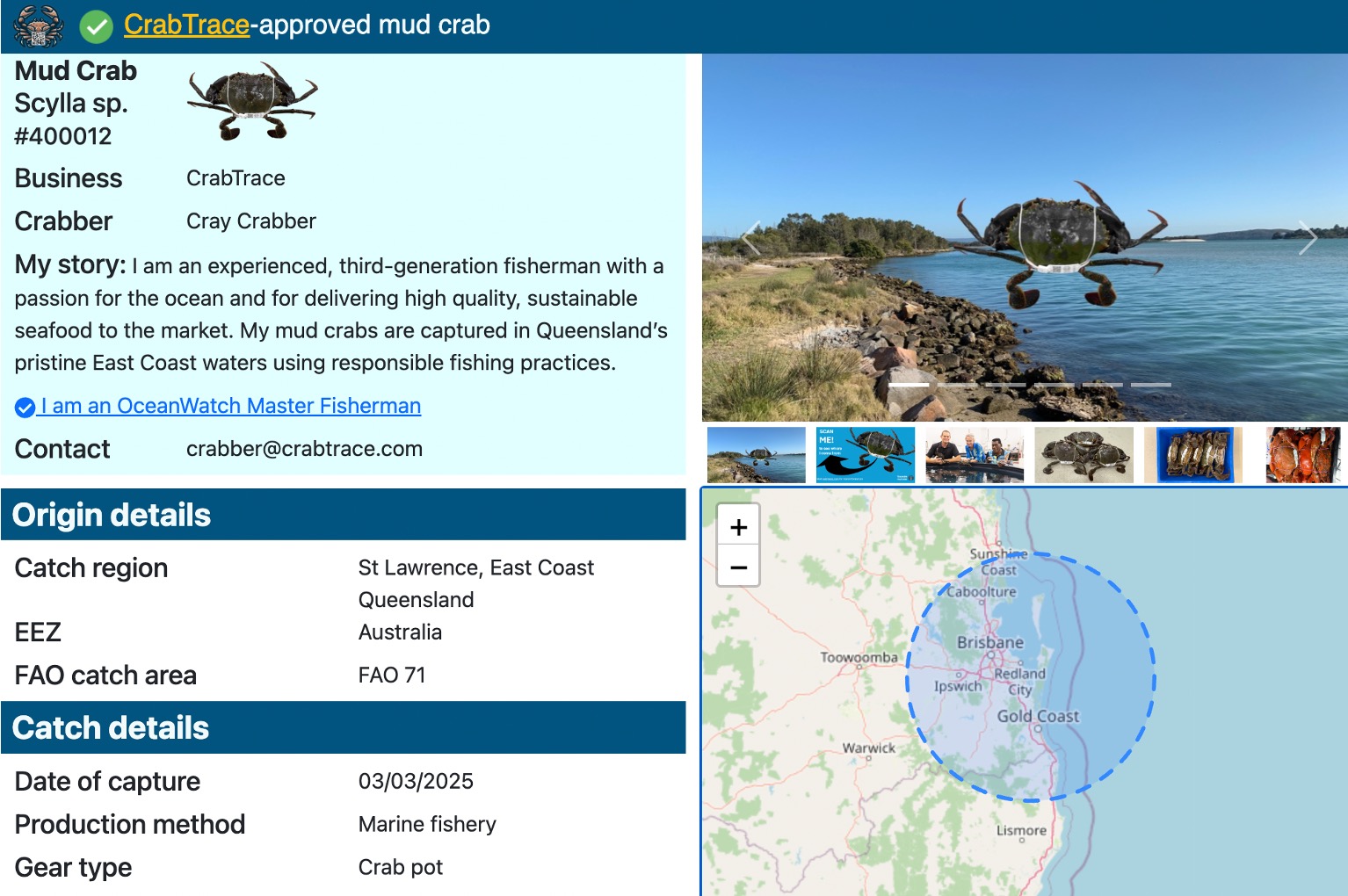
The CrabTrace Web System provides fishers with a simple interface to activate tags, manage trips and control data sharing. Behind the scenes, the CrabTrace Data Platform—hosted on Amazon Web Services—syncs with Fisheries Queensland systems via secure API, automatically submitting trip logs, catch declarations and disposal records. An analytics dashboard shows public scan counts and locations, giving fishers insight into market reach.
Access to data is governed by a role-based model tailored to real-world responsibilities. Fishers can track their crabs through the supply chain, regulators can monitor compliance, and the public can view essential crab-specific data via the unique tag page.
Together, these integrated technologies deliver full supply chain traceability, enhance operational efficiency, reduce reporting burden and increase transparency across the industry.
Transforming how seafood is tracked and trusted
Benefits for regulators, fishers, supply chain partners, and consumers.
Regulators
A tamper-evident, tag-based system that verifies legally sourced product, enhances compliance oversight, and supports sustainable resource management—without increasing administrative burden.
Commercial fishers
Compliance reporting doubles as a marketing asset. A bespoke analytics dashboard tracks scan counts and locations, helping fishers see where their catch gains visibility and how far it travels in the market.
Supply chain
Wholesalers, intermediaries, and retailers gain visibility and confidence in product provenance and quality—supporting responsible sourcing and export standards.
Consumers
Each crab’s unique QR tag links to a digital profile. A simple scan reveals verified details about when, where, and by whom the crab was caught—bridging the gap between harvest and plate.
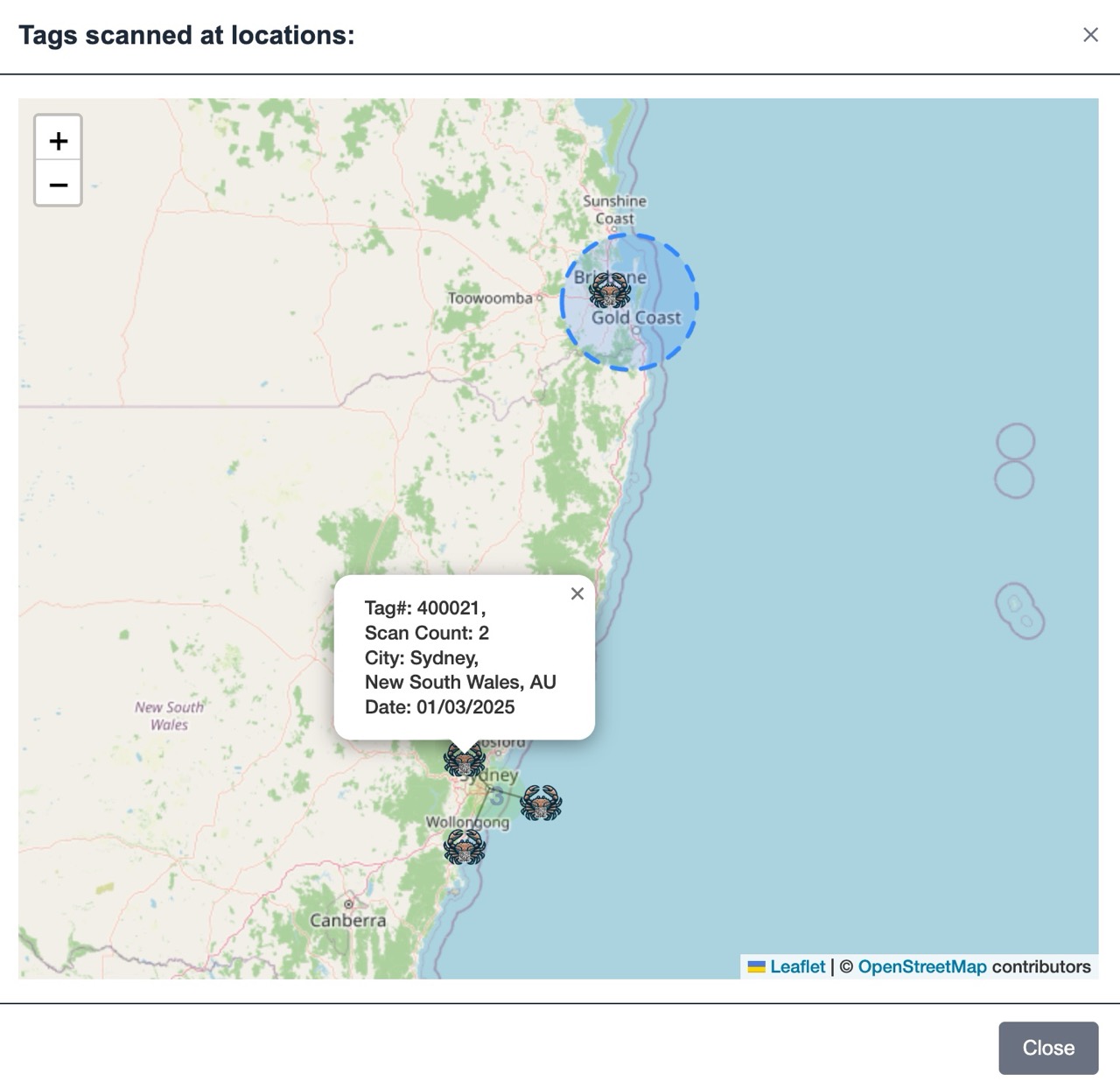
As Australia’s first digital traceability solution for individual seafood units, CrabTrace sets a new standard. Currently in pilot with Queensland commercial fishers and national supply chain operators, it has been praised for its ease of use, practical value, and actionable analytics.
CrabTrace’s impact extends beyond crabs. A robust, low-cost infrastructure built on global standards and secure, role-based access control ensures scalability, data privacy, and trust across complex supply chains. Its flexible architecture is readily adaptable to other fisheries, commodities, and sectors.
Ultimately, CrabTrace is more than a traceability tool—it’s a foundation for a transparent, ethical, and digitally connected food system.